


TopSurveys: Paid Surveys App
4.515.87K Reviews
App Specs
- Version
- 1.0.45
- Updated On
- License
- Free
- Downloads
- 1,000,000+
- Developer
- Top Survey AB
- Categories
- Lifestyle
- Platform
- Android, iOS
Screenshots
 Analysis by AppCompare
I approached TopSurveys as a small, practical way to turn spare minutes into possible cash rewards, not as a replacement for a job or a dependable income stream. That distinction matters before you install it. The app belongs to the lifestyle category, comes from Top Survey AB, and focuses on answering surveys and sharing opinions online. Its free entry makes it easy to try, but the real question is whether the survey experience fits your patience, privacy comfort level, and daily routine.
My overall impression is that this is best treated as an occasional rewards tool. It can make sense when I am waiting for an appointment, commuting as a passenger, or winding down with my phone. It is less convincing for anyone expecting a fixed return for every minute spent. Survey availability can vary, qualification questions can take time, and the value of a session depends on whether a suitable questionnaire appears.
How I would decide whether TopSurveys fits
I’d judge TopSurveys by whether its survey routine fits into time I already have, rather than by how promising a reward sounds. I’d also decide in advance what kinds of questions I’m comfortable answering, so convenience doesn’t quietly push me past that boundary. With those priorities clear, it becomes easier to see the everyday situations where the app is genuinely useful.
Start with your reason for using it
The first decision is simple: am I looking for entertainment with a possible reward, or am I looking for reliable earnings? TopSurveys is much closer to the first category. I would use it when I already have idle phone time and would otherwise scroll through content without gaining anything useful. I would not plan rent, groceries, or recurring bills around it.
That mindset also changes how I judge the app. A short session that ends with no suitable survey is frustrating if I expected guaranteed payment, but less serious if I saw the app as an optional activity. The store summary presents the service around cash rewards and real money for answering surveys. In practice, I would still think of each invitation as an opportunity rather than a promise.
The app is free to download, which lowers the risk of testing it. It also carries a Mature 17+ content rating, so it is not something I would hand to a younger teenager without checking whether it is appropriate for the person using the device. The age guidance is especially relevant because survey topics can relate to personal habits, purchases, opinions, or other adult-oriented subjects.
Judge the workflow, not only the reward language
Survey apps live or die by their workflow. The important questions are whether I can understand why a survey is being offered, how quickly I can begin, and how much effort is spent answering screening questions before learning that I am not a match. I would pay close attention to those moments during an initial trial instead of assuming that the promotional wording tells the whole story.
Worth Reading Before You Choose

EA SPORTS FC Mobile 26 Is a Bigger Football Game, but It Takes Time

Flipboard Shows What News Apps Must Do Beyond the Feed

Switching to Android Auto Means Rethinking Your Driving Routine

Google Calendar Makes a Crowded Week Easier to Manage

Ludo King Makes the Most of the Minutes Between Plans

Baby Panda World Brings Quick Play to Modern Phones, but Its Game Library Feels Busy
A useful personal test is to give the app several separate opportunities across different days. I would note whether the available tasks fit my schedule, whether the questions feel repetitive, and whether I remain comfortable sharing the requested opinions. This is more informative than judging the app after one unusually good or unusually quiet session.
There is also a practical phone-use issue. Surveys are not always ideal for tiny gaps. If I have only a minute before boarding a bus, I would avoid starting anything that might require concentration or a stable connection. A better routine is to open the app when I can finish a questionnaire without rushing, because abandoning halfway through is a poor use of time even when the app itself is easy to navigate.
Understand what “free” means here
TopSurveys does not require an upfront purchase to try. However, the app includes in-app purchases listed at $9.99 per item. That makes it important to keep the reward activity separate from any optional spending. I would not buy anything to improve my chances of earning, and I would review the payment screen carefully before confirming an in-app transaction.
For a rewards app, the safest approach is to treat my phone time as the investment. I would never add money simply because a survey session feels slow. If the app becomes useful, it should be because the free workflow fits my habits, not because I paid to make the experience appear more productive.
Consider trust and personal information
Answering surveys naturally involves sharing opinions and possibly information about preferences or behavior. Before settling into regular use, I would read the app’s privacy and account terms in a calm moment, rather than tapping through them quickly during registration. I would also avoid entering details that are not needed for the task and would think carefully before answering sensitive questions.
This is not a criticism unique to TopSurveys. It is a basic trade-off in the paid-survey category: the service needs responses that are useful to researchers or businesses, while I need to decide what I am comfortable disclosing. If I dislike targeted questions or do not want my opinions connected to a rewards profile, a survey app may simply be the wrong category for me.
Check whether your device is supported
The current version is 1.0.45, and the app requires Android 9 or later. That is a reasonable compatibility point for many Android users, but anyone with an older phone should check the operating system before planning around the service. I would also keep the app updated through the normal store process, since survey availability and account handling can depend on the version installed.
TopSurveys has an average rating of 4.5 from around 387 thousand ratings, with approximately 16 thousand written reviews. It has passed one million installs, so it is not an obscure experiment with no visible user base. Those figures are useful signals of reach and general satisfaction, but they do not guarantee that my survey supply, reward experience, or qualification rate will match another person’s.
Where TopSurveys works best in everyday use
For me, the best test is whether opening TopSurveys feels like a deliberate choice rather than another phone-checking habit. A short, planned visit during a quiet break can keep it useful without letting survey invitations dictate my schedule. That balance matters most in ordinary routines, where even a small interruption can make a supposedly convenient activity feel like a chore.
A good companion for predictable waiting time
The strongest use case I found is structured downtime. Imagine waiting at a clinic, sitting in a hotel lobby, or taking a long train ride as a passenger. I can open the app, check what is available, and decide whether a questionnaire is worth starting. That is a better fit than opening it whenever I am busy, distracted, or likely to be interrupted.
I would create a small routine around it: check once during a quiet part of the day, read the estimated effort or task details carefully, and stop when the session no longer feels worthwhile. The point is not to maximize every possible minute. The point is to prevent the app from taking over my attention while still giving idle time a possible purpose.
The value of a clear stopping rule
One non-obvious advantage of survey apps is that they can be easier to control than endless social feeds. A questionnaire has a natural beginning and end, so I can decide in advance that I will complete one suitable task and then close the app. That makes TopSurveys more appealing to me than an alternative built around continuous browsing when I want a bounded activity.
My stopping rule would be practical: if I have spent several minutes answering screening questions without reaching a worthwhile survey, I would leave and try another day. I would also stop if the questions become too personal for my comfort. Rewards should never pressure me into continuing past my own boundaries.
Useful for people who like giving opinions
Some people genuinely enjoy comparing products, describing habits, and explaining preferences. For them, the reward is not the only motivation; the activity itself can feel more engaging than passive scrolling. TopSurveys is a natural match for that personality, particularly when the questions are relevant to everyday decisions.
It is less suitable for someone who dislikes repetitive forms, changes answers carelessly just to finish, or becomes annoyed by screening questions. Survey quality depends on thoughtful responses, so rushing through them is not a good strategy for the user or for whoever uses the research.
What I would do before completing a long survey
Before beginning a longer questionnaire, I would check that my battery is comfortable, my connection is stable, and I am somewhere I can concentrate. I would also avoid starting one while cooking, walking through traffic, or doing anything that needs my full attention. This sounds obvious, but it is an important difference between a useful spare-time tool and a source of unfinished sessions.
I would keep a simple note of which times of day produce the most usable invitations, without assuming that my pattern applies to everyone. That helps answer a practical question: is the app fitting into my life, or am I repeatedly rearranging my life around it? If the second situation develops, the rewards are probably not worth the friction.
Why the free entry matters
The no-cost starting point makes experimentation straightforward. I can see how the app behaves on my own phone, decide whether the questions feel reasonable, and judge whether the available activity suits me before committing to a routine. That is a genuine strength compared with services that ask for payment before revealing whether the experience is useful.
Still, free access should not be confused with free time. My attention, data, and patience are the real costs. I would evaluate the app by the quality of the overall exchange, not simply by the absence of a download fee.
Where other categories may fit better
I’d choose another category if I want the reward tied to something other than my opinions and attention. Shopping-linked rewards make more sense when I’m already buying something, while task-based options may suit me better when I prefer a clearly defined action. The deciding point is what I’m willing to contribute: survey answers, a purchase, or focused task time.
When a cash-back app is the more natural choice
If my main goal is to recover value from purchases I already plan to make, a cash-back service may suit me better than answering surveys. That type of app connects the reward to shopping activity, while TopSurveys connects it to opinions and responses. Someone who dislikes questionnaires but shops online regularly may find the alternative less mentally demanding.
The trade-off is that cash-back tools usually require a purchase or a qualifying action. TopSurveys can be more flexible for a person who has no shopping planned and simply has spare time. I would choose between them based on whether I want to spend money as part of the activity or spend attention instead.
When a microtask platform is a better match
Microtask services can appeal to users who want structured digital tasks rather than opinion forms. They may feel more suitable when I prefer categorizing, checking, transcribing, or completing a defined action. TopSurveys is the better conceptual fit when I want to express preferences and answer questions, not perform task-based work.
The important distinction is not that one category is universally better. It is that the reward experience feels different. Survey work can be interrupted by qualification, while task platforms may offer a clearer description of the activity before I begin. If uncertainty about eligibility is my biggest annoyance, I would investigate a task-focused alternative instead.
When freelance work is worth the extra effort
Anyone trying to build dependable side income should look beyond survey apps. Freelance marketplaces, tutoring, delivery work, or selling a skill require more preparation, but they can offer a clearer connection between effort and payment. I would not replace that kind of plan with TopSurveys.
TopSurveys has a different role: low-commitment, occasional participation. It is useful when I want something I can open without arranging a client, preparing a portfolio, or accepting a scheduled shift. That convenience is real, but it comes with less control over how much suitable work appears.
When passive-reward apps make more sense
Some users prefer apps that reward a background activity, such as walking or completing device-based goals. Those services may be a better fit for someone who does not want to answer questions at all. TopSurveys asks for active attention and honest responses, so it should not be chosen by someone hoping to earn without engaging.
On the other hand, active surveys can be more transparent in one respect: I know when I am choosing to participate. I can close the app rather than allowing a background-oriented service to become part of my everyday device habits. The right choice depends on whether I value control over my time or minimal interaction.
Why I would not compare it only by headline reward
Different reward categories measure value in different ways. A survey app should be judged by the quality of its available questionnaires, the clarity of its process, and how often I can use it without frustration. A cash-back app should be judged by purchase relevance, while a freelance service should be judged by earning potential and workload.
Comparing only the largest possible reward creates unrealistic expectations. I would compare the time required, the personal information involved, the need to spend money, and the amount of control I have over the activity. That broader view gives TopSurveys a fairer position.
The real cost of switching and building a routine
Trying a different rewards app does not just mean learning another screen; it also means deciding what personal information I’m comfortable sharing again. I’d keep the experiment manageable by evaluating one service at a time and removing alerts that encourage unnecessary checking. That way, I can tell whether TopSurveys adds useful spare-time activity or simply adds another routine to maintain.
Switching is easy, but habits take time
Moving from one rewards app to another is technically simple, but the practical cost is learning a new interface, reviewing another privacy policy, and understanding a different reward process. With TopSurveys, I would first learn how invitations are presented and how the app handles my progress. If I later decide that the survey supply is not worth my time, I would leave rather than forcing myself to continue because I had already invested effort.
I would also avoid installing several survey apps indiscriminately. More apps do not automatically mean more value. They can create repeated questions, more notifications, and a larger trail of personal preferences. A small, deliberate trial is easier to evaluate than a crowded phone full of reward services.
Notifications should serve the user
Survey availability can be time-sensitive from a user’s perspective, but constant alerts can make a phone feel noisy. I would review notification settings after installing the app and keep only the alerts that help me decide when to check in. If the app begins interrupting work, sleep, or family time, I would reduce those interruptions immediately.
This is one of the clearest trade-offs between convenience and attention. A notification may point me toward a useful opportunity, but it can also encourage compulsive checking. I prefer a schedule I control, with occasional manual visits, unless the alerts prove genuinely valuable.
Keep reward expectations separate from household finances
I would record completed activity only as a personal reference, not as guaranteed income. That helps prevent a common mistake: spending more time because I mentally count a possible reward before it is actually available. I would also avoid making purchases or paying for optional items to chase a better outcome.
The listed in-app purchase price of $9.99 per item reinforces that caution. A free survey app can still present paid options, and I would treat those as entirely separate from the earning purpose. If I ever felt that spending was becoming necessary, I would stop using the app.
Know when to uninstall
I would uninstall TopSurveys if the questions repeatedly feel intrusive, if the available activity never fits my schedule, or if I find myself checking it compulsively. An app does not need to be bad for me to remove it; it only needs to be a poor exchange for my attention. That is especially true in a category with many alternatives.
Conversely, I would keep it if it remains easy to ignore when I am busy, offers occasional surveys I actually want to answer, and fits naturally into waiting time. The best sign is not excitement about every session. It is that the app remains useful without demanding a permanent place in my routine.
My recommendation for the right kind of user
I’d recommend TopSurveys to an adult who enjoys giving considered answers and can treat surveys as an occasional use for downtime. I would not recommend relying on it for predictable earnings or continuing through questions that feel too personal. If the app stays easy to ignore when life gets busy, it may suit you; if it starts competing for attention, I’d let it go.
Who should try it
I recommend TopSurveys to adults who enjoy sharing opinions, have regular pockets of idle time, and understand that survey rewards are variable rather than dependable wages. The free download makes a cautious trial reasonable, and the established audience shown by its rating and install figures suggests that many people are willing to use the service.
I would especially suggest it to someone who wants an active alternative to scrolling. Open it during a planned break, read each questionnaire carefully, and decide independently whether the effort and personal questions feel worthwhile. That approach keeps the app in its proper place: an optional lifestyle tool.
Who should skip it
I would steer away from it if I need predictable income, dislike answering personal questions, or have very little patience for screening. I would also skip it if my phone runs an Android version earlier than 9, or if I am looking for rewards that require no active participation. In those cases, a freelance, cash-back, task-based, or passive-reward category may be a better starting point.
Parents should also pay attention to the Mature 17+ rating before allowing a younger person to use it. The age label is not a minor detail for a survey service, because the subject matter and account decisions may not suit every household.
My final view
TopSurveys is worth trying when I approach it with realistic expectations. I like the low barrier to entry, the clear focus on opinion-based activity, and the way it can turn otherwise empty waiting time into something mildly productive. I do not like the uncertainty that naturally comes with survey qualification, and I would never treat the app as a reliable substitute for paid work.
My recommendation is simple: use it as a controlled spare-time experiment, not a financial plan. Give it a few sessions, protect your privacy, avoid optional spending, and judge the experience by the time and attention it asks from you. If that exchange feels fair, TopSurveys can earn a place on your phone. If you want certainty, stronger control over the work you accept, or a reward tied to purchases rather than opinions, another category will probably serve you better.
Pros
- Simple survey interface with clear progress indicators
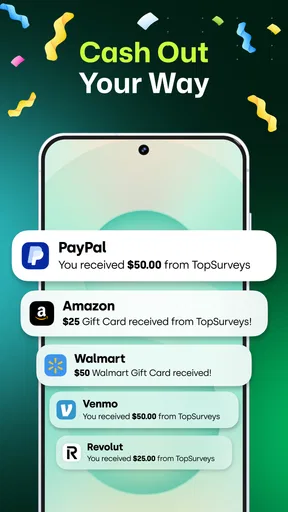
- Multiple payout options make rewards easier to redeem
- New survey invitations can arrive regularly
- Suitable for short sessions during spare time
- Account setup is quick and straightforward
Cons
- Survey availability may vary significantly by location
- Some surveys screen users out after initial questions
- Rewards can take time to reach the minimum payout
- Personal information is required for demographic matching
- Notifications may become frequent if left enabled
FAQs for TopSurveys: Paid Surveys App
What is TopSurveys: Paid Surveys App, and how does it work?
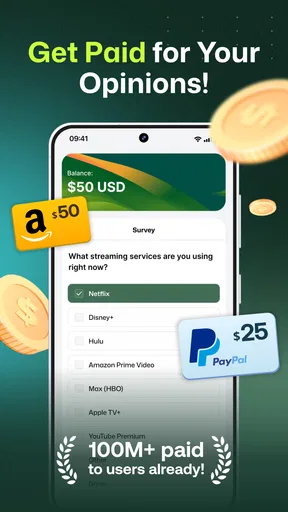
TopSurveys is a rewards application that allows users to earn money or other rewards by completing online surveys. After creating an account, the app presents available questionnaires based on your profile and location. Each survey normally shows an estimated reward and completion time before you begin. Once you qualify and finish a survey successfully, the reward is added to your account balance, subject to the app’s verification rules.
How much money can you realistically earn with TopSurveys?
Your earnings depend on several factors, including your location, age, demographic profile, survey availability, and how frequently you use the app. Some users may receive several survey invitations in a day, while others may see fewer opportunities. TopSurveys should generally be viewed as a way to earn occasional extra money rather than a replacement for employment. Not every survey invitation guarantees acceptance or payment.
How do withdrawals and rewards work in TopSurveys?
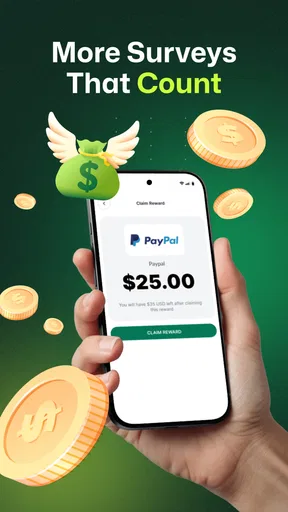
TopSurveys typically allows eligible users to exchange their accumulated balance for available payment methods or digital rewards. The exact options, minimum withdrawal amount, processing time, and regional availability may vary, so you should check the current information inside the app before spending time on surveys. Make sure your account and payment details are accurate, because incorrect information can delay or prevent a successful payout.
Why might I be disqualified from a TopSurveys questionnaire?
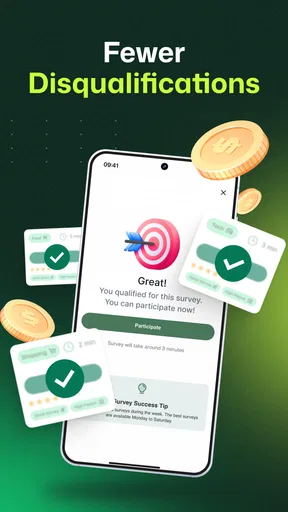
Survey providers usually look for specific participants, and qualification questions are used to determine whether your profile matches their requirements. You may be screened out because the survey has already reached its target number of responses, your demographic information does not fit, or your answers are inconsistent with earlier responses. This can be frustrating, but it is common with survey platforms and does not necessarily indicate a problem with your account.
Is TopSurveys safe to use, and what should I check before signing up?
Before registering, review the app’s privacy policy, terms of service, permissions, and current payout conditions. Avoid providing sensitive information that is not necessary for participation, and use a strong, unique password for your account. You should also download TopSurveys only from a trusted official store or verified source. As with any rewards app, be cautious of messages requesting payment, banking credentials, or unrelated personal documents.


